A typical language class has one teacher and about thirty students, so each student gets very little speaking time. A language lab removes that bottleneck.
Ten benefits
1. Every student gets speaking time
Everyone records responses at once, so quiet students practise as much as confident ones.
2. Listening becomes individual
With headphones, each student controls playback speed and replays audio as needed.
3. Pronunciation feedback is immediate
Built-in speech recognition flags mistakes while the student can still connect them to what they just said.
4. The teacher is no longer the only channel
The lab shares the load of individual attention, and the teacher steps in where needed.
5. Confidence builds in low-stakes practice
Students rehearse privately and replay attempts before speaking in front of classmates.
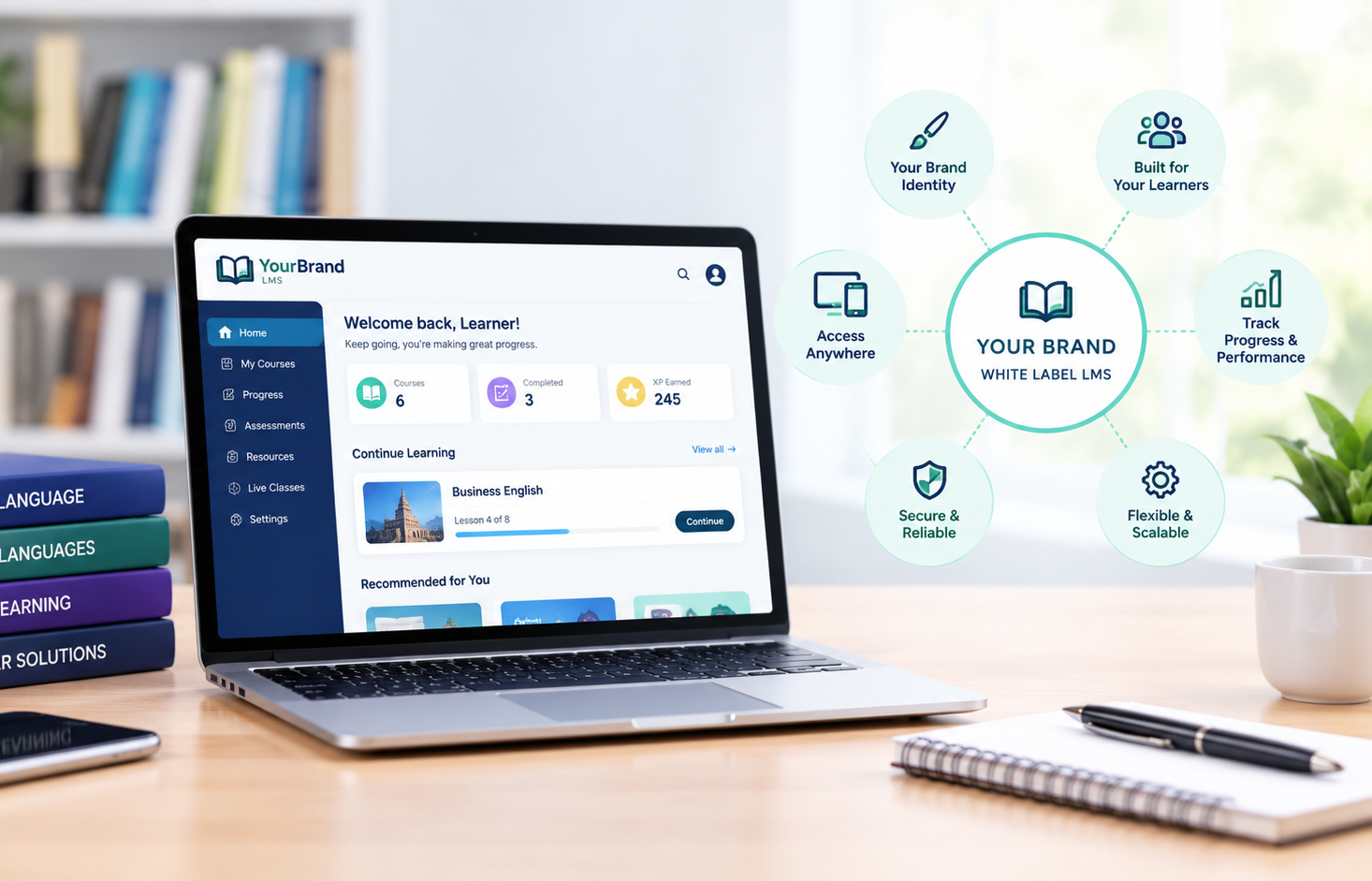
6. Progress is tracked
Logged exercises and scores give schools a clearer picture for parents and curriculum decisions.
7. Mixed-ability classes work
Each student works at their own level, so advanced students are not bored and beginners are not overwhelmed.
8. Accent exposure is routine
Students hear many native speakers from different regions, not just their teacher.
9. Assessment depends less on one exam
Performance across many sessions is a more reliable measure than a single oral test.
10. Practice mirrors real-world use
Modern language use happens through screens, voice notes and calls, and a lab reflects that better than a chalkboard.
The teaching model matters more than the equipment.
A well-run lab offers individual pace, immediate feedback, low-stakes repetition and a clear record of each student’s progress. That is the real argument for building one, well ahead of the equipment list.
For a detailed discussion, write to info@liqvid.com or call +91-8448360148.