
eBook vs Interactive eBook: What’s the Difference?

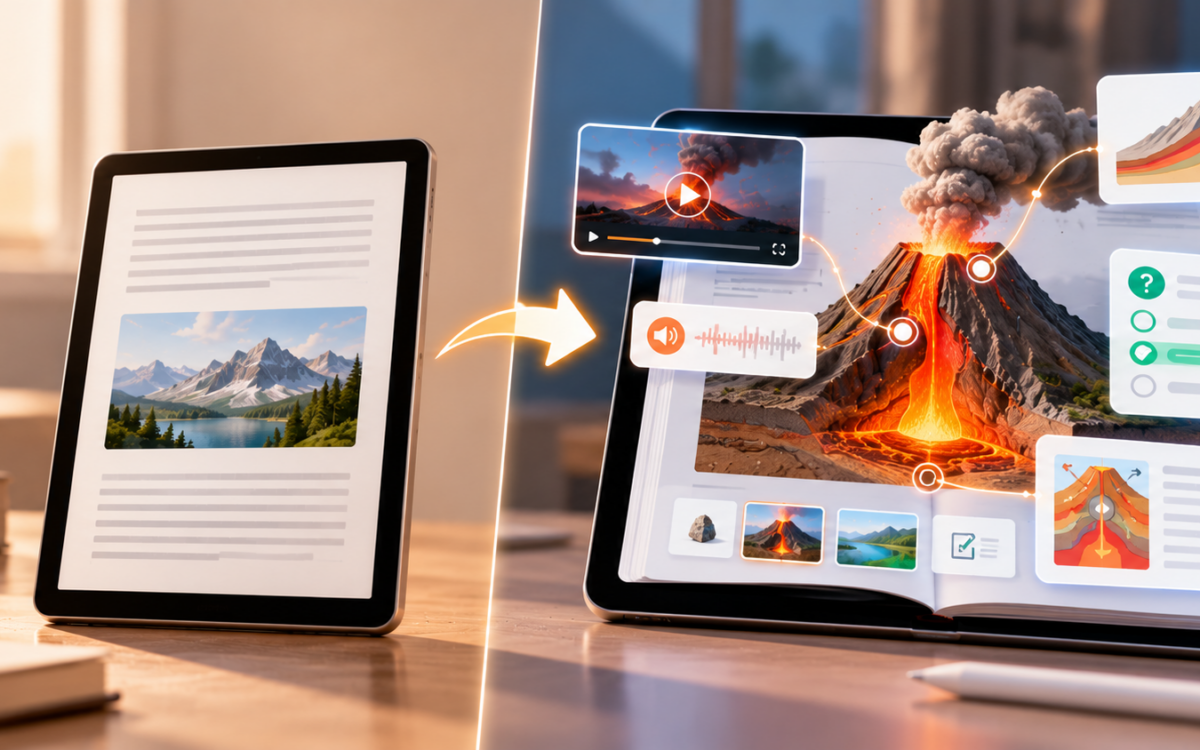
Digital books come in different forms, and the distinction matters when choosing how to publish educational content. A standard eBook gives readers access to a book in digital format. An interactive eBook adds features that allow readers to engage with the content through activities, media and other digital functions.
For educational publishers, the choice depends on the purpose of the publication, the expectations of its readers and the kind of learning experience the content needs to support.
What Is a Standard eBook?
A standard eBook is a digital version of a book that readers can access on compatible devices, such as smartphones, tablets, e-readers and computers. Depending on its format, the text may adjust to the screen size, allowing readers to change font size and other display settings. The book can also include images, hyperlinks, a table of contents and navigation between chapters.
Standard eBooks work well for content where reading is the main activity. Digital novels, reference books, study material and many textbooks can be published in this format. For educational publishers, a standard eBook provides a practical way to distribute existing titles digitally while preserving their core content and structure.
What Is an Interactive eBook?
An interactive eBook includes digital elements that invite readers to do more than read the text. These elements might include embedded media, interactive diagrams, practice questions, audio, animations or activities that respond to a reader’s input.
Consider a textbook chapter explaining the water cycle. A standard eBook might present the explanation alongside an illustration. An interactive eBook could allow students to explore the stages of the cycle, watch an animation and answer questions about how evaporation and condensation work.
The format creates opportunities for readers to engage directly with the subject matter. Its usefulness depends on how well those interactions support the content and the reader’s purpose.
eBook vs Interactive eBook: Key Differences
The main differences relate to how readers use the publication and what the content is designed to achieve.
| Comparison | Comparison Standard eBook Interactive eBook | Interactive eBook |
| Primary experience | Reading digital content | Reading and interacting with content |
| Content | Text, images and supported links | Text and images, with additional interactive elements where supported |
| Reader participation | Mainly reading and navigating | Reading, exploring, responding and practising |
| Assessment | Usually requires separate exercises or tools | Can include built-in questions and interactive assessments |
| Media | May include supported media, depending on format and reader | Can integrate media into activities and explanations |
| Production | Often involves preparing and formatting the publication | May require additional authoring, interaction design and testing |
| Best suited for | Books focused on reading and reference | May require additional authoring, interaction design and testing |
Which Format Works Better for Educational Publishers?
The right choice depends on the content and how readers are expected to use it. A standard eBook is often suitable for academic reference material, reading lists, literature and textbooks that primarily need to be available in digital form. It can also be a sensible choice when the budget, production timeline or reader requirements call for a straightforward digital edition.
An interactive eBook is worth considering when students need opportunities to practise a skill, explore a concept or receive feedback during a lesson. Language-learning materials, science resources and guided workbooks are examples of content that can benefit from these functions.
Publishers should also consider their audience. Younger learners might benefit from carefully designed visual activities, while university students may need interactive simulations or subject-specific exercises. The format should reflect the actual requirements of the material.
What Does Each Format Require to Produce?
A standard eBook project generally centres on preparing the content, establishing its structure, formatting the text and images, and checking the final file.
An interactive eBook project involves these tasks along with decisions about how individual interactions will work. The team may need to develop activities, prepare media, define assessment feedback and test functionality across supported devices.
This affects project planning. Interactive content requires editorial review and technical quality checks to ensure that the activities work as intended and remain consistent with the approved educational material.
Publishers can begin with a single title or chapter to understand the production effort before applying the approach across a larger catalogue.
How Publishing Technology Supports Both Formats
Publishing technology can help teams prepare digital books, manage content and develop interactive learning materials. The tools required depend on whether the project involves a straightforward digital edition or a publication with additional learning functions.
For example, platforms designed for educational publishers can support the development of interactive eBooks from existing PDF or ePub material. Solutions such as those available through Liqvid’s publisher-focused offering provide a route for publishers looking to extend their digital content with interactive learning experiences.
Before choosing a platform, publishers should check its supported formats, authoring capabilities, device compatibility, accessibility features and workflow requirements.
Choosing Between an eBook and an Interactive eBook
Both formats have a place in educational publishing. A standard eBook works well when the priority is convenient digital reading and access to information. An interactive eBook is useful when the content benefits from activities, learner participation or practice within the publication itself.
Start by looking at the purpose of the title, the needs of its readers and the work required to maintain the finished product. Those considerations will help you choose a format that fits the publication and gives readers the experience they need.