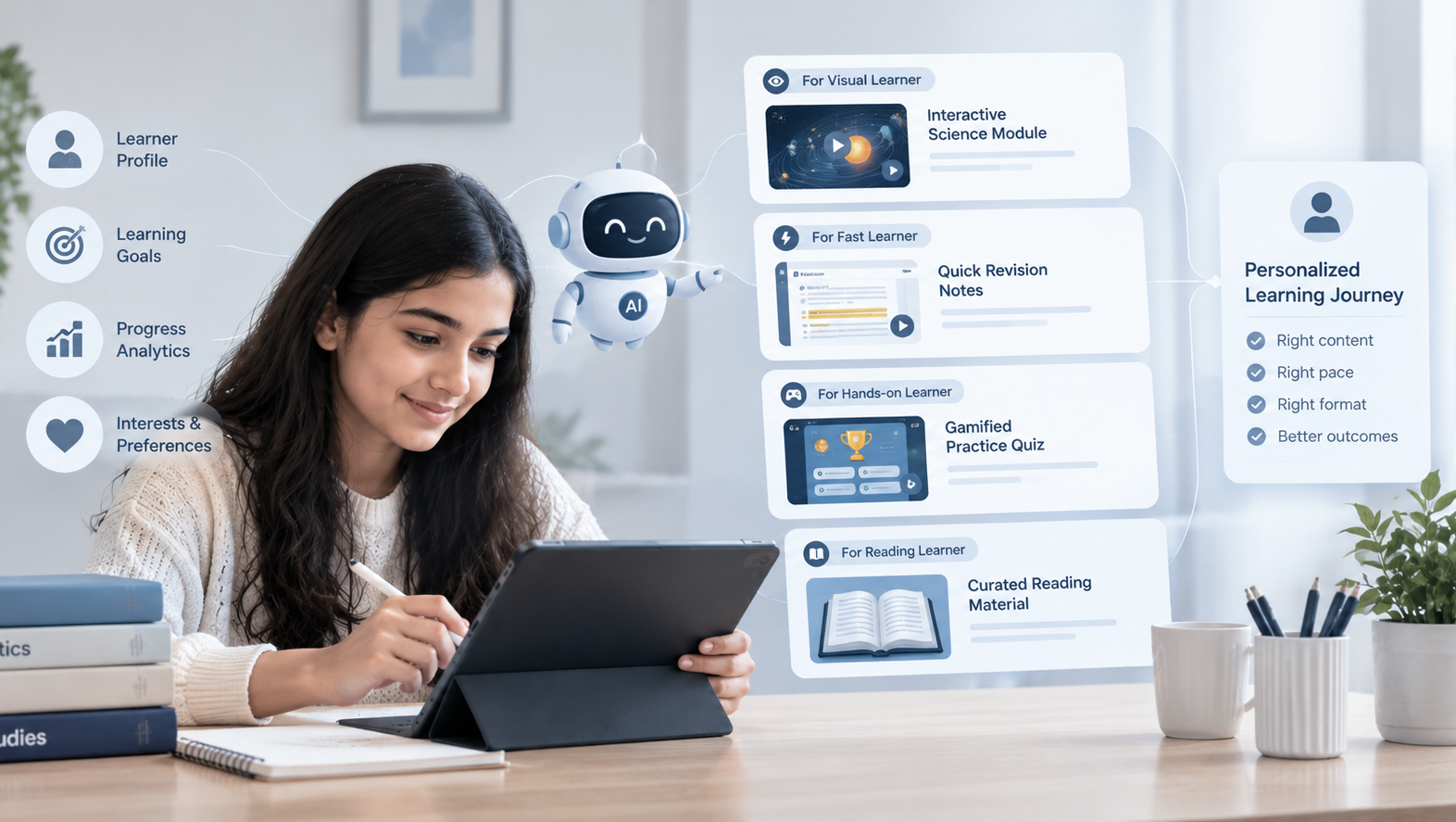
Publishers adding AI to their platforms often meet scepticism about whether personalization works. It depends on how it is built. A scoping review in Computers and Education: Artificial Intelligence found academic performance improved in 59% of the studies reviewed, and engagement in 36%. Personalization is a pipeline: learner data goes in, a tailored experience comes out.
Data before algorithms
Adaptation starts with observing learners: quiz scores, time on sections, retries and skipped content. Liqvid’s analytics shows separate dashboards to learners, trainers and administrators.
Learner signals
Rewatching a video, or doing well on vocabulary but struggling with speaking, tells you what a learner needs. The recommendation engine accounts for regional patterns in word difficulty instead of treating every learner the same.
When the lesson itself changes
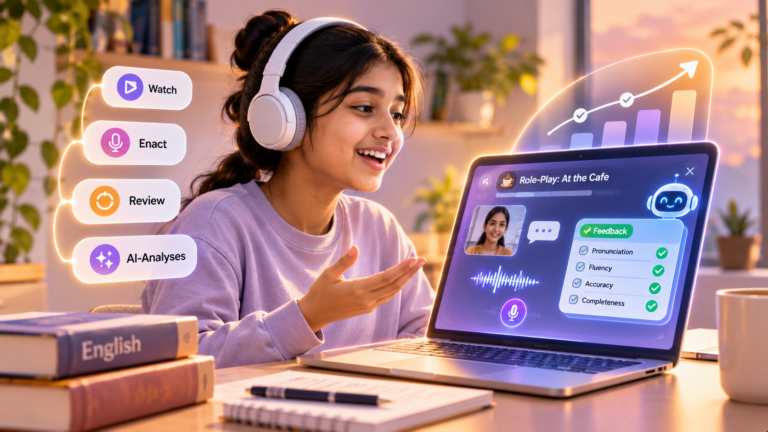
Real personalization changes the sequence, difficulty and support of a lesson, not only the recommendations shown. In the Role Play component, AI analysis of each attempt shapes what the student sees next.
Why scale changes the math
A teacher can adjust for a class by feel. A publisher serving very large numbers of learners needs it to be systematic. Liqvid’s reach is over one million learners, 5,000 locations and more than 1.5 million hours of instruction logged.
Telling real personalization from fake
Give two learners the same material. If only the name changes, it is a template. If the sequence, difficulty and pacing change with observed behaviour, it is real. Learner data also goes stale, so a good system keeps re-checking it instead of locking in an early profile.
Case study: Wiley
Wiley worked with Liqvid to turn classroom English training into digital learning for workforce development: 120 hours of instructor-led training, 300 hours of self-study and more than 10,000 interactive learning elements across web, Android and iOS, delivered in 10 months.
For a detailed discussion, write to info@liqvid.com or call +91-8448360148.