
Language Learning LMS vs Traditional LMS: What’s The Difference?

This Language Learning LMS vs Traditional LMS guide explores why choosing the right learning platform has become increasingly important as digital learning transforms education across schools, universities, publishers, and workplaces worldwide. Learning Management Systems (LMS) have become the foundation of this shift, enabling organizations to deliver courses, manage learners, and measure progress at scale. As adoption continues to grow, many institutions assume that a single LMS can effectively support every type of learning.
In reality, the effectiveness of an LMS depends on what learners are expected to achieve. A platform designed to deliver compliance training or technical certification serves a different purpose from one intended to develop language proficiency. While both may organize learning materials and assessments, language education requires continuous practice, interaction, personalized feedback, and measurable improvement across speaking, listening, reading, and writing.
For educational publishers, language institutes, schools, and organizations, teaching a language goes beyond delivering lessons. It requires an environment where learners continuously build communication skills through meaningful practice and interaction.
This Language Learning LMS vs Traditional LMS comparison explains the key differences between these platforms and why choosing the right one significantly influences language learning outcomes.
Why Language Learning Requires a Different Approach
1. Learning a Language Is Different from Learning a Subject
Most learning programs are designed to help learners acquire knowledge. Whether studying finance, engineering, compliance, or project management, success is measured by how well learners understand concepts and apply them during assessments or workplace situations. Once the required knowledge is demonstrated, the learning objective is generally achieved.
Language learning develops through repeated practice, interaction, and continuous feedback. Fluency grows gradually, making consistent engagement far more important than simply completing lessons.
2. Why Completing a Course Doesn’t Build Fluency
Completing every lesson in a language course does not necessarily mean a learner can communicate confidently. Someone may successfully finish grammar exercises while still struggling to participate in conversations or understand spoken language in real situations.
This happens because language acquisition depends on continuous application rather than content completion. An effective language learning platform must encourage learners to practice regularly, identify individual weaknesses, and provide immediate opportunities to improve instead of measuring success only through course completion.
Language Learning LMS vs Traditional LMS: Key Differences
1. Built for Course Delivery vs Built for Communication
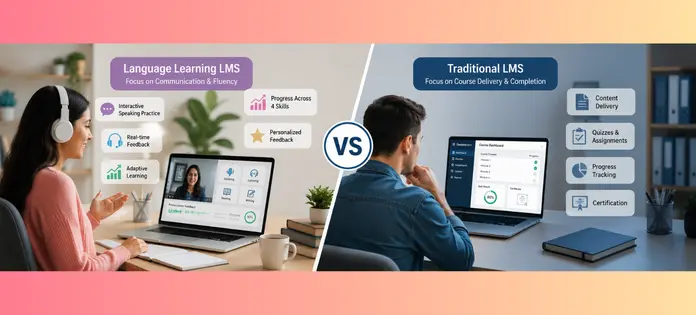
Traditional LMS platforms are designed to organize structured learning programs. They help institutions distribute learning materials, conduct assessments, manage certifications, and monitor learner progress within predefined courses. This approach works exceptionally well for knowledge-based education where learners follow a structured curriculum from beginning to completion.
A Language Learning LMS is designed to develop communication skills through continuous speaking, listening, reading, and writing practice rather than simply delivering lessons.
2. Passive Learning vs Interactive Learning
Traditional LMS platforms primarily rely on videos, presentations, documents, and standard quizzes to deliver information. These resources effectively support theoretical learning but provide limited opportunities for learners to actively use a language while learning.
A Language Learning LMS uses interactive learning experiences that encourage participation instead of passive observation, making vocabulary, grammar, and communication concepts easier to understand and retain.
3. Fixed Learning Paths vs Adaptive Learning Journeys
Traditional LMS platforms generally move every learner through the same sequence of lessons regardless of their existing knowledge or learning pace. This standardized approach works well for subjects where all learners are expected to complete the same curriculum before advancing.
Language learning is rarely that uniform. Some learners quickly develop vocabulary but require additional pronunciation practice, while others become confident speakers before strengthening grammar or writing skills. A Language Learning LMS responds to these differences through adaptive learning that adjusts content based on individual performance, providing targeted practice where improvement is needed most.
4. Standard Assessments vs Continuous Skill Development
Traditional LMS platforms typically measure learning through quizzes, assignments, and final assessments that evaluate whether learners have understood the material covered in a course. These assessments are designed to measure knowledge after instruction has taken place.
A Language Learning LMS integrates assessment into everyday learning through contextual activities and progressive practice. Learners strengthen communication skills continuously instead of being evaluated only after completing lessons.
5. Performance Reports vs Personalized Feedback
Most traditional LMS platforms provide completion reports, assessment scores, and progress dashboards that help instructors monitor learner performance. While these insights are valuable, they primarily indicate what learners have completed rather than how they can improve.
A Language Learning LMS extends beyond reporting by providing personalized feedback throughout the learning experience. Immediate guidance helps learners improve grammar, vocabulary, pronunciation, and communication before mistakes become habits, supporting continuous improvement.
Publishers using dedicated language platforms have recorded measurable skill gains across all four competencies – 25% improvement in listening comprehension, 18% gain in speaking fluency, and 15% increase in reading speed — outcomes that generic platforms cannot track or produce.
6. Scheduled Learning vs Continuous Practice
Knowledge-based courses often follow defined schedules. Learners attend sessions, complete assignments, and finish courses within a specified timeframe. Once learning objectives are achieved, interaction with the content typically reduces.
Language learning depends on consistent practice. A Language Learning LMS provides unrestricted access across devices, allowing learners to revisit lessons and practice regularly, helping build long-term proficiency.
The comparison between a Language Learning LMS vs Traditional LMS clearly shows that language education requires far more than course delivery – it requires continuous communication practice, personalized feedback, and adaptive learning.
Choosing the Right LMS for Your Learning Goals
The starting point is the learning objective. Organizations delivering language education need a platform built specifically for communication skills. Interactive learning experiences, adaptive progression, contextual assessments, personalized feedback, and continuous access work together to create an environment where learners actively build fluency. These capabilities make a Language Learning LMS the right fit for educational publishers, schools, universities, language institutes, and enterprises delivering language training at scale.
The Right Platform Shapes Better Language Learning
Languages are acquired through interaction, repetition, feedback, and continuous practice. A platform built around these principles creates the conditions where learners make real progress, session after session, well beyond course completion. For organizations where language outcomes matter, the platform behind the learning is as important as the content itself.
Most learners who struggle with language retention are placed in environments never designed for language acquisition, they complete lessons, pass assessments, and still cannot hold a conversation. A dedicated Language Learning LMS closes that gap by building the environment around how language is actually developed, giving learners communication skills that strengthen consistently over time.
Global publishers delivering structured language programs at scale have brought three CEFR levels to market in under ten months and launched platforms with over 13,000 interactive elements in nine, and that is proof that the right infrastructure does not slow content down, it accelerates it.
For a detailed discussion about the suitable LMS for you, kindly email at info@liqvid.com or Call at +91-8448360148